Tuesday, December 21, 2010

2010 Brought Trial and Victory for Sinergia's Day Hab Program

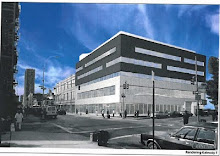
For Sinergia’s Day Habilitation Program, consistency is an important foundation for progress. As we mentioned in an earlier post, the program helps adults with developmental disabilities to expand their social, recreational and vocational skills. Changes in scheduling can be very disruptive to the Day Hab participants but early in 2010 they demonstrated how well they could handle a big transition. That's when Sinergia packed up and moved to a new location in East Harlem, at 2082 Lexington Avenue on 126th Street. After much anticipation and fanfare, Sinergia’s brand new offices were ready on February 1st. On that day and in the months since then, the Day Hab participants have shown that they don’t adapt to new surroundings by trial and error but by trial and victory! They quickly learned new transportation routes and braved new bus rides home. When the new elevator was being repaired, they climbed the stairs or took an alternate elevator. It’s as though every participant was determined to make 2082 Lexington their new home.

Putting their green thumbs to work at the Carver Garden.
While the neighborhood in Harlem is very different than the one at 29th Street, the Day Hab participants have embraced change and used it as a springboard for adventure. Day Hab groups have volunteered at the Carver Garden on East 124th St., growing fresh vegetables and learning how to prepare them. They’ve visited the library and shopped at the brand new mall on 116th St. which houses Manhattan’s first Target store. They've also walked to Yankee Stadium, gone swimming at the local public pools and played basketball and football games at the park on 130th Street.
 
Go Yankees!

The new location has not been an impediment to continuing past activities like Encore Meals on Wheels or exercising at the YMCA and Riverside Park. Life on Lexington Avenue has continued as usual with fun activities and adventurous new excursions. Some participants volunteered at the Brooklyn Animal Resource Coalition Shelter, walking homeless dogs and caring for lonely cats. In July, some of them went “Walking with the Dinosaurs” at Madison Square Garden. They've visited exciting places like Rye Playland, the Brooklyn Botanical Garden, and Coney Island, and also had fun closer to home, barbecuing in a local park and picnicking in the garden.
Riding the Staten Island Ferry
The new spacious conference room on the fourth floor was the perfect place for the first Volunteer Award Ceremony and Spring Art Exhibit, as well as the annual Thanksgiving Lunch on November 24th. Day Hab also observed Black History Month and Hispanic Heritage Month with informational celebrations, we premiered our first Photography Exhibit, and had a costume party for Halloween. The participants are now looking forward to holiday celebrations in December and the Dinner Dance in January.  With the coming of the New Year, Day Hab will continue taking on new challenges and adventures in stride. It’s what they do!

--Rob, Vianka, and Erin

Wednesday, December 15, 2010

Spotlight on the We Are Parents Too Program

Parents with developmental disabilities are frequently considered unable to provide adequately for their children, and as a result the youngsters then end up being placed in the foster care system. According to Through the Looking Glass (TLG), a disability nonprofit agency in Berkeley, California, the out-of-home placement rate in foster care for children of parents with intellectual disabilities is 25 to 60%.

In the 1980’s Sinergia pioneered a parent training and education program for parents with developmental disabilities.  It was prompted by our experiences providing community housing and supports for families headed by persons with developmental disabilities who lived with their infants and young children.  The premise was that intensive services, supports and parent training were needed in order to help the mothers and fathers become effective parents and keep their families together. This was the beginning of the “We Are Parents Too” program.   We are very appreciative that through these many years the NYS Office of People with Developmental Disabilities has supported and funded this program which has helped countless families that traditionally have been invisible and underserved.

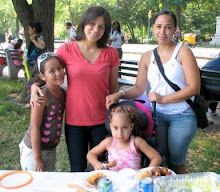
The program continues to train and help parents to preserve their families by offering a 10 week series of workshops which focus on appropriate discipline, custody issues, nutrition, domestic violence and housing topics (the pictures in this article were taken during a graduation ceremony for this course). In addition to the informational workshops, the program coordinator also conducts supervised visits with the parent and child, and assists in the reunification process. The parent coaching we offer is unique to Sinergia.

The “We Are Parents Too” has also formalized a parent support group for parents with developmental disabilities. This support group is especially important for the participants who have lost custody of their children, since the separation can often be traumatic, confusing and distressing. The support group helps parents to become self-advocates, gain insight into their own behavior and establish a network. Studies report that 90% of parents with disabilities are socially isolated.  Through the support group parents have an opportunity to meet others that are going through similar experiences.  Parents with developmental disabilities, especially those from low socio economic groups, often feel discriminated and judged when assumptions are made about their parenting abilities. A specially designed peer support group brings hope, increases socialization skills and the sharing of information, resources and advocacy strategies.

Isabel Malavet (pictured left in the background), the coordinator of the program, is a tireless advocate on behalf of participating parents and works with the Agency for Children’s Services, Family Court, the Community Partnership Program in East Harlem and the Parent Advocates for the Child Welfare Organizing Project. For more information contact 212-643-2840.

Monday, December 6, 2010

MNN, CCCADI and Aprendes: Making Their Mark in El Barrio

Three organizations will soon bring much needed services to El Barrio. The Aprendes Foundation is a philanthropic organization dedicated to community engagement and education, strategic partnerships, fundraising and critical interventions for East Harlem and the Bronx. They help organize charter schools and support communities that want to take control of their public education. Aprendes president Tony Lopez (photo left) says they are currently submitting an application for a proposed community grown charter school opening in September 2011.

Founded in 1992, the Manhattan Neighborhood Network (MNN) offers Manhattan residents the ability to create and submit their own videos for air on four Public Access cable TV stations, potentially reaching 620,000 viewers. MNN offers free training and certification classes in video production, editing and broadcasting to Manhattan residents. According to Zenaida Mendez (photo right), who is in charge of Community Outreach & Media Services, this year they trained 11,000 people, 300 of them youths. Their Youth by Youth Media program trains young people with skills they can use to make money, and she says a control room operator can earn around $60,000 a year.

MNN purchased a firehouse on 104th Street between Lexington & 3rd Avenue, turning a building which had been empty for 18 years from an eyesore to a cutting edge facility with 9000 square feet of open multi purpose space that will help break the digital divide in Spanish Harlem.

The Caribbean Cultural Center African Diaspora Institute started 34 years ago as a research project and has been awarded a firehouse on 125th Street. "We're in the process of phasing in and should be completed by May 2013," says Director Martha Moreno Vega. "It will be a state of the art cultural center for use by the community. We are cultivating various projects, among them "Mi Querido Barrio," and its accompanying cultural tourism and public campaign. As part of that we are training young people on how to lead a non profit organization. Another project is "University Without Walls", for young people to acquire an arts degree online," she added.

Recap of Community Educational Forum

Sinergia was very pleased to host a Community Educational Forum on December 1, 2010 at our Metropolitan Parent Center. Community leaders, parents, and stakeholders interested in advancing the academic, employment and career achievements of young people were invited to share information and discuss possible solutions to deal with the educational inequities that impact the lives of Latino children and youth. In one of the heaviest downpours of the year we had an amazing turnout of about twenty six people.

Although Sinergia did not receive the Promise Neighborhood grant this year, we are committed to pursuing collaborations and strategies that will reduce the overall achievement gap between East Harlem children and youth and those residing in more affluent communities. This forum was just one of our  efforts to engage the community in improving the quality of life of children and youth throughout their life span and advancing efforts for groups to work together to build and strengthen El Barrio. 

Juan Cartagena from the Community Service Society study presented a new of Latino Youth in New York City, which was very propitious to the meeting's agenda. The report, which was recently featured in the New York Times, focuses on youth from 16-24 years in New York City and the trends in school, work and income of this group. The statistics are sobering:

  • Latinos make up the largest portion 33% of the age groups of children (fewer than 16 years of age) and youth (ages 16-24).
  • Puerto Ricans, especially males, are the most disadvantaged youth group in New York City, with rates of school enrollment, educational attainment, and employment lower than any comparable group, including black males.
  • Young Puerto Ricans and Dominicans are the two largest Latino subgroups and have extremely low rates of employment
  • Latino youth live in poor households (those with annual earnings of $18,000 for a family of three) more than any other ethnic group.
  • Puerto Ricans face the greatest challenges of all youth sub-groups, despite the fact that they are overwhelming born in New York City.

Dr. Marta Moreno VegaDr. Martha Moreno Vega, Director of the Caribbean Cultural Center African Diaspora Institute, stated that the sad truth is that many small to midsized nonprofits have and will be shut down. "The infrastructure that was built is getting decimated and in the absence of action our institutions will continue to erode. We need leadership to give voice to these inequities," she added.

The last agenda item of the meeting was a discussion of next steps to move the conversation along. They include:
  • Developing a different narrative to deal with the new and grim realities affecting our students, families and communities.
  • Broadcasting future community forums through the Manhattan Neighborhood Network.
  • Inviting public and elected officials to the forums.
  • Soliciting greater youth participation from the communities we serve and getting their perspectives.
  • Fostering greater parent engagement in the educational status of young people, and helping them understand the data and outcomes that affect their children's future.
  • Community organizing, community organizing, community organizing!
  • Greater use of internet and social media to share and disseminate information, studies, reports, data.
  • Demanding greater access, accountability and responsibility from media, particularly Spanish media, to expose the truth and tell the stories of children and families.
  • Creating coalitions to salvage small, vulnerable organizations and institutions that face extinction or reductions in vital services to our communities.
  • Expanding voter registration drives.
This Community Education Forum was an exciting and promising start to conversations dedicated to improving the academic performance and achievement of Latino and other minority students. If you would like to join our efforts please email us at information at sinergiany.org.

During the second part of the meeting we had three organizations who are deeply committed to making significant contributions to East Harlem gave presentations about their relocation plans to the neighborhood. See more below.

Monday, November 29, 2010

Sinergia Gathers Community Leaders to Address Achievement Gap in East Harlem

As a follow up to the East Harlem Promise Neighborhood grant submitted on June 2010, Sinergia is putting together a very special meeting and inviting the planning team, which includes schools, partners and supportive organizations that participated in this initiative plus other East Harlem stakeholders who are interested in advancing the state of education and the development of the community.

Although Sinergia did not receive an award this year from the U.S. Department of Education for the aforementioned grant, the non-profit is determined to pursue other avenues that address the educational inequities and the achievement gap that exists between the children of East Harlem and other more affluent communities.

A new study released by the Community Service Society makes this even more imperative. The report analyzes data showing that Latino youth have the lowest school enrollment of any ethnicity, and young Puerto Ricans and Dominicans, the two largest Latino sub-groups, have extremely low rates of employment. Puerto Rican youth, in particular, stand out as having alarmingly high rates of disconnection from school and work. These figures reinforce the need to develop comprehensive and sustained solutions that will address this issue.

In addition, a report by the National Committee for Responsible Philanthropy evaluated 672 foundations that gave at least 1 million in grants to education from 2006-200. Only about 11 percent of those grants went to "marginalized communities", defined primarily as children in low-income families and minority children. Just 2% of those funds went to fostering long-term change through advocacy efforts and community building.  This means that the "alarming inequities in educational opportunities" in America remain unaddressed, as the report charges. Since about half of public school funding comes from the local level, students living in poor areas tend to go to schools that are under-funded, and kids in richer areas go to better funded schools. This feeds the persistent achievement gap between low-income and high-income students and minority and white students.

Agenda
This meeting will be a unique opportunity to construct a collaboration that addresses the student achievement gap and fosters a supportive community that embraces our children and families. During the first hour there will be a discussion about the achievement gap of children in East Harlem and ways we can continue our efforts to establish a Promise Neighborhood in the area. Juan Cartagena from the Community Service Society will speak about their youth report and the status of Latinos.

The second half of the meeting will be a presentation by three organizations: the Caribbean Cultural Center African Diaspora Institute, Manhattan Neighborhood Network and Hunter College School of Social Work, CUNY (which will be moving to East Harlem). In addition to that, the Avance Charter High School will also present their proposal for a community grown charter school for East Harlem. This will give you an opportunity to meet with their leaders and learn how they will contribute to the community.

What:   East Harlem Educational Community Meeting
When:  Wednesday, December 1, 2010 from 3-6 pm
Where: Sinergia, 2082 Lexington Avenue (between 125-126 St.), 4th floor
RSVP:   212-643-2840

Thursday, October 28, 2010

Sinergia's Board President Gets High Honors

On October 15th, 2010, Sinergia Executive Director Myrta Cuadra-Lash and Deputy Executive Director Michael Mitchell traveled to Long Beach, NY to attend the 1st Annual Hispanic Heritage Month Dinner Dance sponsored by the Long Beach Latino Civic Association. Created by concerned members of the community, the Long Beach Latino Civic Association developed this event to honor outstanding local citizens who have made notable contributions to the City of Long Beach.

One of the three honorees was Len Torres, Ph.D (pictured above far right, next to fellow honoree, Rosa Marie Goeller, and Assemblyman Harvey Weisenberg), who also serves as president of Sinergia’s Board of Directors, and who was selected for the years of public service that he has selflessly dedicated to the people of his hometown. In addition to his years of teaching, working as the Dean of Students at Long Beach High School and serving as an Assistant Principal, Dr. Torres also taught English as a Second Language at Adelphi University and was a Principal and a Superintendent of Schools in Puerto Rico and the Bronx. He has also served on the Long Beach Zoning Board Housing Commission, is the Program Director for the Long Beach Latino Civic Association and is also the first Latino to serve on the City of Long Beach Council.

Sinergia is proud to salute Dr. Torres on his accomplishments and his well deserved acknowledgement on a night that was filled with good food, outstanding music and the company of great friends. Among the celebrants were Harvey Weisenberg, a member of The Assembly of the State of New York (pictured above on the left), and Karen Cerna, also a member of the Sinergia Board of Directors, the Long Beach Latino Civic Association and chairperson of this fabulous event. We feel lucky indeed to have such a well-respected and experienced person as Dr. Len Torres connected to Sinergia and appreciate his efforts on our behalf and for the people with disabilities that we serve.

Tuesday, October 26, 2010

Sinergia's Quilting Tradition Continues

 
Sinergia has developed a tradition of quilt making by parents who have participated in various programs throughout the years.  The first quilt, pictured above, was made in 1997 by parent groups that assisted in the formation of advocacy groups of parents with children with disabilities in the boroughs of Manhattan, Brooklyn and the Bronx. A parent, Cynthia Wallace, took the lead in the design and sewing of the quilt. There are 48 patches surrounding a large square denoting the theme, “It Takes A Village”. The parents embroidered poems, messages in Spanish and English, paintings of flowers, the sun, shooting stars, houses, names of their children and parent groups. A poet, Jean Wood, also inscribed one of her poems, From A Sermon, which reflects on the importance of each one of us and how we are interwoven and inextricably linked with each other. Each patch in this original quilt became a shared message of love for one’s children, home and family and the enveloping circle of community. The quilt is displayed  at the Christine Cuadra Conference Room on the 4th floor of Sinergia.


The second quilt (immediately above and below) was started a decade after and was created by  fifteen parents with developmental disabilities who participated in the “We Are Parents Too” program, as well as others attending the Day Habilitation and Residential Programs. Under the guidance of Maria Torres Bird, a staff member who is a quilter, the parents created a colorful quilt that focused on parenthood. The project gave parents an artistic and creative expression, allowing them to relive loving memories with stories and pictures, regardless of whether they have custody of their child(ren) or not.  This has been especially important for those parents who have lost custody since it is an acknowledgment of their parenthood and their hopes of one day achieving reunification. After completion the participating parents will decide where it will be displayed.


We hope that the quilting tradition at Sinergia will continue for many decades to come since it is a visual representation of stories of families, love and community.

You might also want to read our post last year: "We Are Parents Too" quilt project.