Showing posts with label Health. Show all posts

Saturday, February 2, 2013

Sexual Health Workshops


Our friends at Harlem RBI will be presenting a series of workshops on sexual health at Sinergia through their program called “The BASE.” Participants who attend all seven workshops will be awarded with a certificate upon completion at a luncheon celebrating their accomplishment. Each workshop will take place in the afternoon, 1pm to 3pm.

1) Tuesday 02/19/13 - Understanding HIV &AIDS

2) Friday 02/22/13 - Making Sexual Decisions & Understanding Your Values

3) Tuesday 02/26/13 -Developing & Using Condom Skills

4) Friday 03/01/13 - Learning Assertive Communication Skills

5) Tuesday 03/04/13 - Practicing Assertive Communication Skills

6) Friday 03/07/13 - Personalizing the Risk

7) Tuesday 03/12/13 - Spreading the Word

For information contact DayHab Specialist Erin McSorley at 212-643-2840 ext. 343

Tuesday, June 28, 2011

CPR and First Aid Training for Parents

Earlier this year one of the mothers in our Metropolitan Parent Center (MPC) underwent a very scary experience when her three year old daughter removed a barrette from her hair and placed it into her mouth. The little girl swallowed it and started to choke. Luckily, the mother was able to safely manage the situation and successfully remove the object. After going through such a scary ordeal she suggested that we offer a workshop on first aid techniques so that parents can learn what to do in case of an emergency.

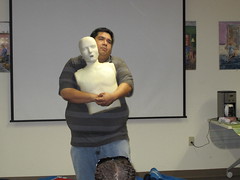
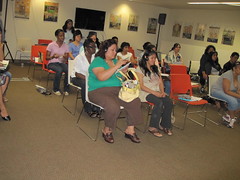
The MPC collaborated with Sinergia’s nursing staff, who were able to recruit a representative from the American Red Cross to conduct a CPR training for parents. Those who attended received first aid information, and they were taught how to perform Cardiopulmonary Resuscitation, or CPR, and help choking victims using the Heimlich maneuver. Mr. Antonio Chavez (above) from the Red Cross brought along a number life size dolls of children and adults that were used to practice CPR techniques. It was an intensive, interactive and exciting experience for the parents. They had to pass an on-site test in order to earn the CPR and First Aid certification, which is good for two years. Eighteen participants were able to obtain the certification, and these parents now possess skills that will help their loved ones in case of an emergency.

Would you know what to do if your child gets hurt or is in need of medical attention? Below are some ways that you can start getting prepared.

BASIC TIPS EVERYONE IN THE HOUSE SHOULD FOLLOW TO CREATE A SAFER HOME

1. DOES EVERYONE IN YOUR HOUSEHOLD INCLUDING YOUR HOME HELP AND CHILDREN KNOW YOUR ADDRESS AND NEAREST LANDMARK? Write your address and nearest landmark down on a wall both upstairs and downstairs in case you need to call for an ambulance. If you panic it’s easier to read off the paper.

2. DO YOU KEEP ALL YOUR FIRST AID ITEMS IN ONE LOCATION OR IN DIFFERENT DRAWERS THROUGHOUT THE HOUSE? If an accident happens its easier if  everything in one place.

3. DOES EVERYONE IN THE HOUSE KNOW WHERE THE FIRST AID KIT IS ? Ideally on a shelf out of reach or in a locked cupboard.

4. DO YOU HAVE A FIRST AID KIT IN THE CAR? Accidents can happen anywhere, at the beach, shopping mall etc. Make sure you have a back up first aid kit in the car.

5. DO YOU HAVE A LANDLINE IN ADDITION TO YOUR MOBILE? In an emergency you don’t want to be looking for your mobile only to find it’s out of battery or credit.

6. DO YOU AND YOUR HOME HELP KNOW WHERE THE NEAREST HOSPITAL IS FROM YOUR HOME AND THE QUICKEST ROUTE?

7. IF YOUR BABY OR CHILD CHOKES ON FOOD, FOR EXAMPLE A GRAPE, WOULD YOU KNOW HOW TO RESPOND?
Choking is every parent’s worst nightmare and so common amongst infants and young children. A first aid course will demonstrate the most effective way to remove an obstruction in the throat without causing further damage.

8. DOES EVERYONE IN THE HOUSE KNOW THE NUMBER TO CALL FOR AN AMBULANCE?
You would be surprised at the number of parents and home help that have never thought of it. Dial 999 for medical assistance.

9. DO YOU HAVE RULES IN THE HOUSE TO AVOID ACCIDENTS IN THE KITCHEN, BATHROOM etc.?
For example, pan handles should always be facing inwards on the stove, have a "no kids" zone in the kitchen while preparing food, remove knives and sharp utensils from kitchen surfaces immediately after use.

10. DO YOU KEEP YOUR MEDICAL DOCUMENTS IN A CENTRAL LOCATION THAT CAN BE EASILY REACHED SHOULD YOU HAVE TO GO QUICKLY TO THE HOSPITAL? Label a separate folder for everyone in the home and store all medical information in these files in one place so everyone knows where they are in case you have to take them quickly to the doctors or hospital.

WHEN TO GO FOR HELP

Your child needs to go to an emergency room if he or she has:
  • An injury that causes the child to lose consciousness
  • A deep laceration
  • A possible broken bone
  • A burn
  • An animal bite
  • Swallowed something toxic
  • Extreme difficulty breathing (for instance, because of an asthma attack or choking.
  • A convulsion
  • Vomited blood
  • Bleeding from the ear
  • A fall followed by a severe headache, persistent vomiting, weakness, or an
  • abrupt change in mental status (hallucinations, incoherence, irritability or
  • extreme lethargy) within 24 hours
  • A fall or head injury and the child is under 1
  • A fever and the child is under two months old
Courtesy of the American Red Cross and the American Heart Association. 

Friday, April 1, 2011

Health Effects of Consuming Too Much Sugar


Did you know that Mountain Dew soda contains the equivalent of 17 packets of sugar? And a small can of Red Bull, seven. That's what Sinergia staff and Day Hab participants found out during a seminar held March 28th, 2011 entitled "Health Effects of Consuming Too Much Sugar". The training was brought to Sinergia by the Union Settlement in partnership with the New York City Department of Health and The Public Health Outreach, as a part of their “Take Care New York” campaign to raise awareness about sugar consumption. The presenter, Kathleen Cain, a public health outreach coordinator for Union Settlement, talked about the frighteningly high consumption of sugar in all it’s forms, its lack of nutritional value, and the availability of healthy alternatives. She suggested that when shopping for fruit juice, people should read labels and choose those that are 100% fruit juice and then dilute them with water, because they still contain a significant amount of natural sugars. She promoted a petition to encourage local stores to move healthy beverages and foods to the front of their stores to help the communities choose better. "The forty plus participants that were present answered questions about their daily diets and were astounded to find so many items that were not so beneficial to their health, says Day Hab specialist Rob Maldonado. "Ms. Cain encouraged all of us to drink lots of water as the ultimate replacement for soft drinks."

This insightful workshop will be held again on April 13th for the Up-Living Program participants.

Monday, March 7, 2011

Choosing Healthy Foods

For Asuncion Muyalde, nutrition is an ongoing process. She oversees Sinergia's nursing department, and part of their job is to assist participants of the residential programs with their menu planning and food shopping. "Some of our consumers have problems because of their nutritional intake," explains Ms. Muyalde, "so for individuals with diabetes or other chronic conditions, proper foods are essential to their well being.  For example, for consumers with hyper tension we ensure they are on a low salt diet, although sometimes it's difficult to enforce. We educate consumers on food choices and what foods are loaded with vitamins and minerals so that they can maintain their health goals, whether it's low weight or low blood sugars."  The nursing staff teaches residents and other staff members about the wide variety of inexpensive food choices available in the market. "They don't have to buy organic products which are costlier. The most important thing is choosing foods wisely to promote health - that's a continuous process, a real nutritional challenge," she adds.

Ms. Muyalde came across this list on cspinet.org. "It's loaded with so much great information about foods that people that might not be aware of," she points out.

TEN Super Foods You Should Eat:

1.) Sweet potatoes= A nutritional all- star, loaded with carotenoids, Vitamin C, Potassium and fiber.

2.) Mangos= Just one cup supplies almost as much Vitamin A and C as most people need in an entire day.

3.) Plain Yogurt= Has more protein, potassium, calcium, zinc, and vitamins B-6 and B-12 than sweetened yogurt.

4.) Broccoli= Lots of vitamin C, carotenoids, and folic acid.

5.) Wild Salmon= The omega-3 fats in salmon can reduce the risk of sudden- death heart attacks.

6.) Crisp Breads= Loaded with fiber and and often fat-free.

7.) Beans= Inexpensive, low in fat, and rich in protein, iron, folic acid, and fiber. Choose garbanzo, pinto, black, navy, kidney or lentils.

8.) Watermelon= Excellent source of Vitamin C and carotenoids, and it tastes great.

9.) Butternut Squash= An easy way to get payloads of vitamins A and C and fiber.

10.) Leafy Greens= Loaded with Vitamin C, carotenoids, calcium & fiber.

March is National Nutrition Month so for more information on staying healthy visit eatright.org. Other articles of interest:
How Much Do Fruits and Vegetables Cost?
The Food Pyramid
Daily Food Planners & Interactive Tools 

Sinergia is offering 3 upcoming workshops on the topic of Alternative Nutrition for Children with Disabilities: Gluten Free Diets, on March 3rd, Reading Labels: Choosing Healthier Foods with Less Chemicals, on March 24th and Implementing a Dairy Free Diet for Kids, on April 14th. To register for these FREE events, please call Gina Peña-Campodonico at 212 643-2840, ext. 305 or by e-mail at gpena at sinergiany.org.

Friday, February 4, 2011

The Diet and Disability Connection


Is there a connection between disability and the food we eat? That question was very much on Lizette Dunn-Barcelona's mind. The Associate Director of Sinergia had searched for years for different ways to cope with her daughter's severe asthma. "My 14 year old would frequently have bouts of hay fever, and since we were unable to control her asthma at home, she was often hospitalized - for days - until her breathing was normalized," explains Ms. Dunn-Barcelona. She had often wondered about the effects that certain foods had on allergies, and then two years ago she read that gluten accumulates in the body and inhibits its ability to fight environmental toxins. "I decided to limit my daughter's gluten intake during allergy season, between March and May, and noticed a significant difference in her body's response. She still sneezed all the time and got asthma, but we were able to control it from home and she wasn't hospitalized," adds the mother of two.

Last December Ms. Dunn-Barcelona attended a workshop offered by Sinergia entitled "Alternative Nutrition for Children with Disabilities: Gluten Free Diets". Her son had been recently diagnosed with ADHD, and having had such positive results by changing her daughter's diet, she was very interested in the topic. The instructor, Kristin Boncher, who is founder of WhatToFeedYourKids.com, talked about her own child and how through food she got him to be more responsive to his environment, interact with people and break free of whatever had a hold of him. She achieved this by removing gluten, soy and dairy from his diet. Since Ms. Dunn-Barcelona's family was already diary free, and because of the success she had when limiting her daughter's gluten intake, she decided to eliminate all three of those foods from her household, commencing in February 2011. In order to get her family onboard with the idea, she took on the role of guinea pig, and on December 23, 2010 embarked on her food "experiment".

"I felt more energetic and was able to focus more easily at work. I purchased gluten, soy and diary free bread, pasta and cheese and incorporated them into my diet. On January 9, 2011, I was celebrating my birthday and ate a slice of birthday cake; it was regular cake filled with gluten. Within 20 minutes I felt as if someone had given me a sedative. I was unable to concentrate, and lost my focus at work. The entire day I felt sluggish and tired. I began to think about my son and wondered if his inability to concentrate is exacerbated by the cloudiness caused by the food I'm feeding him. All along I've been limiting his sugar intake, but never thought about removing anything else."

Ms. Dunn-Barcelona immediately went back on her diet and can't think about turning back. She has learned what to buy and how to cook it and is feeling better because of the changes she's made. "I'm looking forward to introducing my family to new, healthy ways of eating, and hopefully completely eliminating my daughter's allergy and helping my son on his quest to deal better with his diagnosis," she says.

Sinergia is offering 3 upcoming workshops on the topic of Alternative Nutrition for Children with Disabilities: Gluten Free Diets, on March 3rd, Reading Labels: Choosing Healthier Foods with Less Chemicals, on March 9th and Implementing a Dairy Free Diet for Kids, on April 14th. To register for these FREE events, please call Gina Peña-Campodonico at 212 643-2840, ext. 305 or by e-mail at gpena@sinergiany.org.  
Photo credit

Friday, October 1, 2010

Flu Season Q and A with Sinergia's Nursing Staff Coordinator

As fall gets underway it's that time of the year again when we need to disseminate important information about the Influenza virus, commonly known as the "flu". Last year the H1N1 outbreak caused more illness in young people and pregnant women than usual, and although the World Health Organization (WHO) declared an end to the 2009 H1N1 flu pandemic, the same virus is expected to circulate again this flu season, along with other seasonal flu viruses.Click  her for more on the current situation.

We asked Sinergia's Nursing Coordinator, Asuncion Muyalde BSN-RN, some basic facts to keep in  mind.


What is Flu? 
As defined by the Center for Disease Control (CDC), it is a contagious illness caused by the influenza viruses. It can be mild to severe and at times lead to hospitalization and even death.

When I should get the Influenza vaccine? 
Annual outbreaks of the seasonal flu usually occur during the late fall through early spring. The best time to get the vaccination will be during the month of October and November.

What is the biggest issue for persons with disabilities and their parents?
The dissemination of information is the number one issue – knowing the importance of getting a vaccination and where to get one.
Most people that don’t get flu shots don’t think they need one until the peak of the season when they get sick and sometimes it’s too late.

Where I can get the vaccine? 
Your primary care physician will offer shots. However, children and adults with disabilities often have a certain set schedule to visit their doctor and get follow ups, and they have to wait until there is an appointments available in their area. So in addition, the Department of Health has immunization clinics in Manhattan, Brooklyn, Queens and the Bronx that offer flu shots at no cost, and also many pharmacies offer them for a nominal fee. In New York, check out CVS, Duane Reade and Walgreen's. Last year Sinergia was a recipient of donations from the DOH; not only for our consumers but for those in our staff who needed it. I have forwarded our request to Department of Health to receive free flu shots again this year and am awaiting their response.

Some say getting the vaccine has more health risks than not getting it. Is that true?

Some people have heard that flu shots will harm their child or that there will be bad side effects so they won't take the vaccination. There may be minimal side effects - like a low grade fever - but these are not fatal or deadly. Your doctor will explain that to you and they always do a pre-assessment questionnaire beforehand in case you have allergies or have had a bad reaction in the past.

Who needs to get vaccinated?
  • People 65 years of age and older
  • Younger people at high risk from influenza and its complications, including children 6 through 23 months of age
  • Residents of Long Term Care Facilities
  • People with long-term health problems such as:
    -asthma
    -lung disease
    -anemia, and other blood disorders       
    -metabolic disease such as diabetes
    -heart disease
    -kidney disease
  • People with weakened immune system
  • Household contacts of people at high risk
  • Healthcare workers, and
  • Children younger than 9 years of age getting influenza for the first time
The Nursing Team urges parents and caretakers of the disabled to seek information on getting vaccinations. Any questions please feel free to call us at ext. 361.

For more useful tips and resources visit www.flu.gov.

Friday, December 4, 2009

Sinergia Participates in Race to Deliver


Sinergia 's Day Habilitation and Up-Living Programs have but one mission: to assist individuals in improving their quality of life and integration into their community.  One of the more recent success stories we have is about the individuals who participated in the Race To Deliver, sponsored by God’s Love We Deliver, who are prominent figures in the program.  Frank, Sol, Vanessa Jay, Terri, Edith, Maria, Joseph and Michael have been active participants in activities that have improved their health and fitness. By joining the YMCA, Riverbank State Park and enjoying fitness walks in their community, they have improved their overall health and became motivated to participate in the 4-mile walk.

During the race, which was held in Central Park on Sunday, November 22nd, Sol was cheerful and kept greeting other marathoner’s and was determined to complete the race, which he did with a big smile on his face.  Frank, who in the past has been adamant about not leaving his residence, was free spirited and engaging during  the walk.  Once he got to the finish line he said, “I will do this again”.  Joseph and Michael kept a steady pace and were leaders among some of their peers and staff.  Terri, Vanessa and Edith walked a brisk walk and kept far ahead of their peers.  Maria and Jay, were stars among the group and completed the 4 mile walk with a smile on their faces.  Needless to say, the staff, coordinators and administrators of Sinergia are very proud of all the participants,  not only for completing the walk-a-thon but for also giving back to their community and helping others in need.

Peter Sartori
Up Living Assistant Coordinator, Sinergia

Monday, September 21, 2009

Children with disabilities at higher risk for swine flu

As a follow up to our last post, there's a new report from the Center for Disease Control (CDC) which found that children with disabilities are at higher risk of contacting the H1D1, or swine flu. According to this article from Disability Scoop, "of the 36 children who died from swine flu by early August, two-thirds had a chronic illness or developmental disability such as cerebral palsy, developmental delay, muscular dystrophy, respiratory troubles or cardiac problems."

And from "Swine flu risk higher for children with disabilities, CDC reports", here are some warning signs to look for:

-Fast breathing or trouble breathing

-Bluish or gray skin color

-Not drinking enough fluids

-Severe or persistent vomiting

-Not waking up or not interacting

-Being so irritable that the child does not want to be held

-Flu-like symptoms improve but then return with fever and worse cough

But the good news is that only one shot shot is needed, which effectively doubles the supply of shots available, as reported in this video clip from Bloomberg:


So make sure you get all your family vaccinated this season!

Friday, September 4, 2009

Tips For Staying Safe During Flu Season

Flu season will soon be upon us and we will need to be particularly careful due to the presence of the Swine Flu or H1N1 virus. The Swine Flu is now being called Novel H1N1 because it is a new flu virus that is causing illness in people. This new virus was first detected in people in the United States in April 2009. This virus is unique in that it is a combination of flu virus strains that have been observed in pigs, birds and humans. This virus is spreading from person-to-person through coughing or sneezing, probably in much the same way that regular seasonal influenza viruses spread. The World Health Organization is classifying the novel H1N1 flu as a “pandemic” because it is a new virus strain that has never infected people before and also is affecting people on a global scale, spreading from one continent to another.

Symptoms
The symptoms of novel H1N1 flu virus in people include fever (over 100 degrees), cough, sore throat, runny or stuffy nose, body aches, headache, chills and fatigue. A significant number of people who have been infected with this virus also have reported diarrhea and vomiting. Severe illnesses and death has occurred as a result of illness associated with this virus. The effects of novel H1N1 virus has ranged from mild to severe and most people who have become ill with this new virus have recovered without requiring medical treatment About 70 percent of people who have been hospitalized with novel H1N1 virus have had one or more medical conditions previously recognized as placing them at “high risk” of serious seasonal flu-related complications. This includes pregnancy, diabetes, heart disease, asthma and kidney disease. Interestingly, the information from the Center for Disease Control (CDC) shows that novel H1N1 flu has caused greater complications in people younger than 25 years of age than older people. At this time, there are few cases and few deaths reported in people older than 64 years old, which is unusual when compared with regulas seasonal flu. So far, novel H1N1 appears to have the affects of seasonal influenza and the feared deadly impact has not been apparent.

What To Do
People infected with seasonal and novel H1N1 are contagious, and may be able to infect others from 1 day before getting sick 5 to 7 days after. This can be longer in some people, especially children and people with weakened immune systems and people infected with the new H1N1 virus. A person with novel H1N1 illness should be excluded from school, work, and related activities and should not go into the community, except to seek medical care, until they are symptom-free (no fever without fever control medications and feels well) for at least 24 hours. In order to protect yourself and to stay healthy, you should do the following:

• Cover your nose and mouth with a tissue when you cough or sneeze. Throw the tissue in the trash after you use it.

• Wash your hands often with soap and water, especially after you cough or sneeze. Alcohol-based hands cleaners or hand sanitizers that contain at least 60% alcohol are also effective. Wash with soap and water with soap and warm water for 15 to 20 seconds (sing the “Happy Birthday” song twice).

• Avoid touching your eyes, nose or mouth. Germs spread that way.

• Stay home if you get sick and limit contact with others to keep from infecting them.

By Godfrey Rivera