Showing posts with label Training. Show all posts

Saturday, February 2, 2013

Sexual Health Workshops


Our friends at Harlem RBI will be presenting a series of workshops on sexual health at Sinergia through their program called “The BASE.” Participants who attend all seven workshops will be awarded with a certificate upon completion at a luncheon celebrating their accomplishment. Each workshop will take place in the afternoon, 1pm to 3pm.

1) Tuesday 02/19/13 - Understanding HIV &AIDS

2) Friday 02/22/13 - Making Sexual Decisions & Understanding Your Values

3) Tuesday 02/26/13 -Developing & Using Condom Skills

4) Friday 03/01/13 - Learning Assertive Communication Skills

5) Tuesday 03/04/13 - Practicing Assertive Communication Skills

6) Friday 03/07/13 - Personalizing the Risk

7) Tuesday 03/12/13 - Spreading the Word

For information contact DayHab Specialist Erin McSorley at 212-643-2840 ext. 343

Sunday, August 5, 2012

CPR Re-certifications


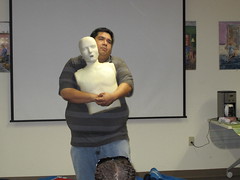
Sinergia staff in action at the CPR Re-certifications. Re-certification is a mandatory requirement for all the staff that are directly involved in providing health care for all the consumers we serve. Sinergia sponsors the events and invites a member of the American Heart Association to teach the class. "Cardio Pulmonary
Resuscitation (CPR) saves lives and this is why all of the staff are trained to continue to provide efficient care for all of our consumers, not only in the Residential settings, but also in the different programs where we provide Direct Care Staff such as UpLiving, DayHab, Respite and Family Care," explains Asuncion Muyalde, Head Nurse at Sinergia.

Tuesday, November 29, 2011

Learning to Use the Internet as an Advocacy Tool


On Thursday November 17, 2011 the Metropolitan Parent Center (MPC) conducted a workshop entitled, “Internet 101: Learning to Use the World Wide Web. Presenter Mike Mitchell, Deputy Executive Director of Sinergia with the assistance of Godfrey Rivera, Co-Director of the MPC, taught parents the fundamentals of working with the Internet and how to use it as an advocacy tool. They also learned how it can be used to get informed about issues such as how their children’s disabilities affect their learning in school.

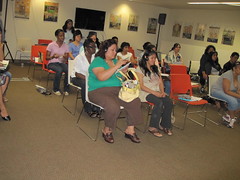
Participants also learned about e-mail communication, and how to search topics by using “web browsers.” Parents were given hands-on opportunities to practice using a number of laptops that were set up for their use. They followed instructions by viewing on a large screen while Mr. Mitchell provided easy-to-understand instructions on how to navigate the Internet. The workshop was also available to the Spanish-speaking parents via the use of simultaneous interpretation. In addition, a list of disability-related Internet resources was provided to them, which you can find below.

Disability-Specific Sites 
1.    http://www.add.org/
This site provides information, resources and networking opportunities to help adults with Attention Deficit/Hyperactivity Disorder (ADHD) by bringing together science and the human experience for both adults with ADHD and professionals who serve them.

2.    http://www.autismconcepts.com/
This site shares information from a variety of sources and provides many links to other sites regarding practical ways to help, plan and manage the lives of children with autism. Information with respect to any treatment, therapy, program, service or provider herein is intended for information and educational purposes only.

3.    http://www.autism.org/
The Center for the Study of Autism provides information about autism to parents and professionals, and conducts research on the efficacy of various therapeutic interventions for children with autism.

Behavior
4.    Behavior Disorders
http://www.behaviordisorder.org/
This website for teens, adults and parents offers information on behavior disorders, conduct disorders, and other behavior problems. Their articles are written to educate the general public about behavior disorders, the warning signs, treatment, and statistics on behavior issues.

5.    Behavioral Disorders in Early Childhood
http://www.brighttots.com/Behavioral_disorders.html
This website discusses factors such as the environmental and genetic influences that may contribute to challenging behaviors in young children. There is also information on treatments and interventions for children with behavioral disorders.

6.    Center on the Social and Emotional Foundations for Early Learning
http://csefel.vanderbilt.edu/about.html
The Center on the Social and Emotional Foundations for Early Learning is project designed to strengthen the capacity of Head Start and child care programs to improve the social and emotional outcomes of young children.

7.    Conduct Disorders-Support for Parents
http://www.conductdisorders.com/
This is a website written by parents who are raising children with many different diagnoses regarding conduct disorders, and who demonstrate oppositional behaviors and are resistant to parenting.

Learning Disabilities
8.     www.chadd.org
Children and Adults with Attention Deficit Disorders (CAADD.) This organization advocates for students with ADHD and coexisting disorders.

9.     www.interdys.org
The International Dyslexia Association is the oldest of the organizations that are specifically concerned with learning disabilities. Both a medical and an educational emphasis are maintained in this organization

10.    Learning Disability Resources
http://www.as.wvu.edu/~scidis/ldinfo.html
This website is a directory with links to other websites with information and resources pertaining to learning disabilities.

11.    National Center on Learning Disabilities
http://www.ncld.org/
The National Center for Learning Disabilities works to ensure that the nation's 15 million children, adolescents and adults with learning disabilities have every opportunity to succeed in school, work, and life.

12.    http://www.ucp.org/
United Cerebral Palsy (UCP) is the leading source of information on cerebral palsy and is an advocate for the rights of persons with any disability. As one of the largest health charities in America, the UCP's mission is to advance the independence, productivity and full citizenship of people with disabilities through an affiliate network.
(Photo)

Tuesday, June 28, 2011

CPR and First Aid Training for Parents

Earlier this year one of the mothers in our Metropolitan Parent Center (MPC) underwent a very scary experience when her three year old daughter removed a barrette from her hair and placed it into her mouth. The little girl swallowed it and started to choke. Luckily, the mother was able to safely manage the situation and successfully remove the object. After going through such a scary ordeal she suggested that we offer a workshop on first aid techniques so that parents can learn what to do in case of an emergency.

The MPC collaborated with Sinergia’s nursing staff, who were able to recruit a representative from the American Red Cross to conduct a CPR training for parents. Those who attended received first aid information, and they were taught how to perform Cardiopulmonary Resuscitation, or CPR, and help choking victims using the Heimlich maneuver. Mr. Antonio Chavez (above) from the Red Cross brought along a number life size dolls of children and adults that were used to practice CPR techniques. It was an intensive, interactive and exciting experience for the parents. They had to pass an on-site test in order to earn the CPR and First Aid certification, which is good for two years. Eighteen participants were able to obtain the certification, and these parents now possess skills that will help their loved ones in case of an emergency.

Would you know what to do if your child gets hurt or is in need of medical attention? Below are some ways that you can start getting prepared.

BASIC TIPS EVERYONE IN THE HOUSE SHOULD FOLLOW TO CREATE A SAFER HOME

1. DOES EVERYONE IN YOUR HOUSEHOLD INCLUDING YOUR HOME HELP AND CHILDREN KNOW YOUR ADDRESS AND NEAREST LANDMARK? Write your address and nearest landmark down on a wall both upstairs and downstairs in case you need to call for an ambulance. If you panic it’s easier to read off the paper.

2. DO YOU KEEP ALL YOUR FIRST AID ITEMS IN ONE LOCATION OR IN DIFFERENT DRAWERS THROUGHOUT THE HOUSE? If an accident happens its easier if  everything in one place.

3. DOES EVERYONE IN THE HOUSE KNOW WHERE THE FIRST AID KIT IS ? Ideally on a shelf out of reach or in a locked cupboard.

4. DO YOU HAVE A FIRST AID KIT IN THE CAR? Accidents can happen anywhere, at the beach, shopping mall etc. Make sure you have a back up first aid kit in the car.

5. DO YOU HAVE A LANDLINE IN ADDITION TO YOUR MOBILE? In an emergency you don’t want to be looking for your mobile only to find it’s out of battery or credit.

6. DO YOU AND YOUR HOME HELP KNOW WHERE THE NEAREST HOSPITAL IS FROM YOUR HOME AND THE QUICKEST ROUTE?

7. IF YOUR BABY OR CHILD CHOKES ON FOOD, FOR EXAMPLE A GRAPE, WOULD YOU KNOW HOW TO RESPOND?
Choking is every parent’s worst nightmare and so common amongst infants and young children. A first aid course will demonstrate the most effective way to remove an obstruction in the throat without causing further damage.

8. DOES EVERYONE IN THE HOUSE KNOW THE NUMBER TO CALL FOR AN AMBULANCE?
You would be surprised at the number of parents and home help that have never thought of it. Dial 999 for medical assistance.

9. DO YOU HAVE RULES IN THE HOUSE TO AVOID ACCIDENTS IN THE KITCHEN, BATHROOM etc.?
For example, pan handles should always be facing inwards on the stove, have a "no kids" zone in the kitchen while preparing food, remove knives and sharp utensils from kitchen surfaces immediately after use.

10. DO YOU KEEP YOUR MEDICAL DOCUMENTS IN A CENTRAL LOCATION THAT CAN BE EASILY REACHED SHOULD YOU HAVE TO GO QUICKLY TO THE HOSPITAL? Label a separate folder for everyone in the home and store all medical information in these files in one place so everyone knows where they are in case you have to take them quickly to the doctors or hospital.

WHEN TO GO FOR HELP

Your child needs to go to an emergency room if he or she has:
  • An injury that causes the child to lose consciousness
  • A deep laceration
  • A possible broken bone
  • A burn
  • An animal bite
  • Swallowed something toxic
  • Extreme difficulty breathing (for instance, because of an asthma attack or choking.
  • A convulsion
  • Vomited blood
  • Bleeding from the ear
  • A fall followed by a severe headache, persistent vomiting, weakness, or an
  • abrupt change in mental status (hallucinations, incoherence, irritability or
  • extreme lethargy) within 24 hours
  • A fall or head injury and the child is under 1
  • A fever and the child is under two months old
Courtesy of the American Red Cross and the American Heart Association. 

Tuesday, May 31, 2011

Job Opportunities for Teens in the New York Area

Are you (or someone you know) looking for something productive for your teenager to do this summer? If you need ideas to fill up their free time and keep them busy, here are a few places that are offering internships and/or training for young adults this summer:

The Bronx: YAIP (Young Adult Internship Program) a paid internship for three months that includes work readiness and support services to young adults 16-24.  For More Info Visit www.bronxworks.org

Brooklyn:
OBT (Opportunities for a Better Tomorrow) Provides on-the-job training/apprenticeship for urban youth in two locations in Brooklyn.  For More Info Visit www.obtjobs.org

Manhattan:
Year Up provides 6 months of training and a corporate apprenticeship for 18-24 with their High School/GED.  For More Info Visit: www.yearup.org

Queens: Elmcor Youth & Adults Activities, Inc. provides various vocational and educational services to young people.  For More Info Visit: www.elmcor.org or www.eec.sunyeoc.org

Staten Island/Manhattan:
The Way to Work, Inc. provides extensive trainings, internships, and job placement services to young people 17-21.  For More Info Visit: www.thewaytoworknyc.org

For New York City-Wide (DYCD's) Programs that connect Urban Youth click on the links below:

Summer Youth Employment Program (SYEP)
A seven-week summer employment initiative open to young people between the ages of 14 and 24. Participants work up to 25 hours a week while earning $7.25 per hour in assignments that include government agencies, hospitals, summer camps, nonprofits, small businesses, and retailers. The application process begins April.

NYC Ladders for Leaders
An innovative program that offers high school and college students the opportunity to participate in summer internships with some of the most dynamic corporations and businesses in New York City.

Young Adult Internship Program
As part of Mayor Bloomberg's Commission for Economic Opportunity, DYCD is providing the most job-ready disconnected youth with short-term paid internships, job placements, and follow-up services.

In-School Youth (ISY) Program
Provides occupational skills, employment services, and educational opportunities to low-income high school juniors and seniors.

Out-of-School Youth (OSY) Program
Provides extensive job training and employment services to 16-21 year-olds who are not enrolled in school.