Showing posts with label workshops. Show all posts

Saturday, February 2, 2013

Sexual Health Workshops


Our friends at Harlem RBI will be presenting a series of workshops on sexual health at Sinergia through their program called “The BASE.” Participants who attend all seven workshops will be awarded with a certificate upon completion at a luncheon celebrating their accomplishment. Each workshop will take place in the afternoon, 1pm to 3pm.

1) Tuesday 02/19/13 - Understanding HIV &AIDS

2) Friday 02/22/13 - Making Sexual Decisions & Understanding Your Values

3) Tuesday 02/26/13 -Developing & Using Condom Skills

4) Friday 03/01/13 - Learning Assertive Communication Skills

5) Tuesday 03/04/13 - Practicing Assertive Communication Skills

6) Friday 03/07/13 - Personalizing the Risk

7) Tuesday 03/12/13 - Spreading the Word

For information contact DayHab Specialist Erin McSorley at 212-643-2840 ext. 343

Tuesday, January 31, 2012

Sinergia's Autism Initiative Events Calendar February thru June

The following events have been scheduled:

February 14, Tuesday:  *Desayuno / Encuentro
February 21, Tuesday: Help me Get Through the Day, giving strategies and practices during those very difficult moments. 
March 15, Thursday:  Nest and Horizon Programs for children with autism with Dorothy Siegel, program co-founder.
March 27, Tuesday:  *Desayuno / Encuentro
April 5, Thursday:  Sensory Integration and Positive Outlook Practices for children with autism and other disabilities, with Margarita Gendelman.
April 24, Tuesday:  Play Skills for Socialilization, Social Skill Groups, Strategies - POSTPONED
May 18, Friday:  Photography and Art workshop for children with autism with Michelle Lopez, Queens Library and Museum.
May 29, Tuesday:  *Desayuno / Encuentro
June 2012 :  Surprise pending confirmation.

*Desayuno/Encuentros are in Spanish

For more updates visit our Upcoming Events Calendar.

Monday, January 30, 2012

Free Resources: Parental Control Software

On Wednesday January 18, ten parents who attend the Metropolitan Parent Center’s (MPC) support group participated in a workshop about how to use the Internet. The third floor of Sinergia has a library available for parents along with a computer area adjacent to the library that has a number of computers available to parents, so we were able to give them direct, hands-on instruction. The workshop was conducted in Spanish and covered everything about identifying the components of a computer: the tower, monitor, keyboard, and mouse, and what their functions are. This was done because the majority of the parents have little or no computer literacy skills so it was important that they knew some basics on how computers work. In addition, most of the parents do not have computers at home. The parents were also offered some basic information about the Internet, including how to log on and how to make inquiries using the Google search engine. Because they are all parents of children with disabilities, we practiced how to find information about their children’s disabilities (i.e., autism, Down syndrome, cerebral palsy.) They were shown that they could write questions in Spanish and would be given responses in Spanish. The MPC promotes the fact that in order for parents to be effective advocates, they need to learn how the disability affects their children’s ability to learn in the classroom.

Parents also received information about parental controls that protect children from being able to access inappropriate or dangerous Internet web sites. While the parents may lack computer and Internet skills, their children are very knowledgeable on that subject so some time was dedicated to showing the class how to check on the websites children have visited via the “history tab” in the Firefox, a popular web browser available to Internet users. A list of free downloadable parental control software was provided to parents, and some links are provided below. Overall, the parents enjoyed this workshop very much and expressed great interest in future opportunities to learn about, and be able to use the Internet as a tool to further their understanding about disabilities.

Free Parental Control Software

1.    K9 Web Protection - K-9 blocks websites in more than 70 categories, including pornography, gambling, drugs, violence/hate/racism, malware/spyware, phishing
2.    Parental Control Bar - Free software that helps concerned parents prevent their children from accessing adult-oriented web sites.
3.    Action Alert - Creates a kid-safe PC with filtering and website blocking and permits parents to review activity to determine whether anything suspicious occurs.
4.    KidsWatch - Allows parents to set computer usage time limits by child and blocks access to dangerous and inappropriate websites. It alerts parents immediately when a child steps outside the boundaries of safe surfing. KidsWatch™ will automatically send you e-mail alerts when your child enters or receives a suspect phrase or keyword from any chat conversation.

Free Parental Control Software in Spanish (Controles Para Padres en español)
1.    Naomi - Un programa para bloquear páginas web inadecuadas, dirigido a menores de edad que están expuestos en la red, con contenidos como por ejemplo pornografía, etc. Cada vez que se intente acceder en forma voluntaria o accidental a una página inadecuada el navegador se cerrará rápidamente.
2.    Time Sheriff - Permite administrar las horas que pasan sus hijos en la computadora. Time Sheriff puede limitar el tiempo de sesión de usuarios, prevenir la ejecución de juegos, navegadores y programas de mensajería instantánea.
3.    PC Lock Station - Un programa que permite monitorizar y limitar las actividades de un usuario frente a la PC. Permite establecer límites a la navegación por sitios inapropiados, definir horarios o tiempos máximos de uso.
4.    Amigo Control Parental - Este programa graba lo que se ve en la pantalla en todo momento para que después un padre pueda comprobar qué ha estado haciendo su hijo en la computadora. Es más, puede leer lo que ha escrito y lo que su hijo ha leído.

MPC holds workshop on Behavior Management Techniques for students with ADHD

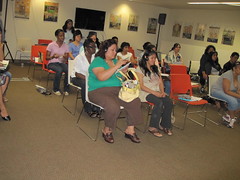
Despite the cold weather, on January 20, more than twenty-five parents attended our workshop on Behavior Management.  Miriam Cusicanqui, a supervising social worker at St. Luke’s Roosevelt Hospital shared behavior strategies with parents.  The strategies demonstrated were based on years of research in behavior development and they included:
  • Parent–child relationship, restoring and nurturing that relationship with positive feelings and building self-esteem.
  • Increasing desirable behaviors through praise, acknowledgement and incentives, including the use of behavioral charts.
  • Managing non-compliance, including the use of time-outs or other types of consequences. 
Parents should consider finding a therapist to help them practice these strategies consistently and to get through the often difficult challenges involved in carrying them out. The NYU Child Study Center has an excellent database to help you find a doctor. These strategies should also be used in school and if necessary implemented in a child’s behavior intervention plan. For more behavior strategies click here.

 The MPC can help with implementing these strategies in your child’s school by contacting our intake coordinator at (212) 643-2840 ext. 336. 

Are We Over-relying on Medication To Treat Behavioral Problems?

The over-reliance of medication to treat behavioral problems is becoming a rampant problem for individuals with disabilities. Recently the NY Times focused on the problem in state run group homes in its article “In Treating Disabled, Potent Drugs and Few Rules.”  The psychologist interviewed felt that medication does not address the underlying problem and that the behaviors could best be addressed by therapy. Lizabeth Pardo, an attorney in the Metropolitan Parent Center (MPC), sees this pattern in our schools. Many of her clients with ADHD are on medication but are not getting any type of behavior therapy privately or getting sufficient support through a behavior intervention plan at school. The workshop we presented is one way Sinergia is educating parents about behavior therapy to ensure their children are getting the proper care.

Friday, January 13, 2012

Workshop: Financial Assistance and Rental Subsidies // Taller: Asistencia Financiera Para Inquilinos

Monday, January 23rd, 10am-12pm
EMERGENCY FINANCIAL ASSISTANCE AND RENTAL SUBSIDIES
a presentation by
The Human Resources Administration Department (HRA) of Social Services of New York City
Are you falling behind with your rent payments? Are you facing a non-payment eviction? Want to know how you can obtain assistance with your rent?

Come and learn how you can apply for financial assistance to pay rent arrears. Learn who is eligible, the documentation required, charitable organizations, rental subsidy (FEPS) and other services offered by HRA
Presented by: Karina Cuevas, Manhattan Borough Coordinator, NYC Human Resources Administration

Place: Sinergia Inc., 2082 Lexington Avenue between 125th and 126th 4th Floor New York, NY
Directions: Take the 4, 5, or 6 train to the 125th station. Bus: X80, M35, M60, M100, M101, & Bx15 to 125th St.
Date: Monday, January 23rd, 2012
Time: 10:00am – 12:00pm

Contact: Yesenia Estrella or Maria Pabón, Housing Advocates
(212) 643-2840 ext. 249 & 350
Email: yestrella@sinergiany.org
Spanish Simultaneous Translation is available but you must call to request it.

*****************************

Lunes, 23 de enero, de 10:00am – 12:00pm
Sinergia cordialmente les invita a un taller sobre:
ASISTENCIA FINANCIERA DE EMERGENCIA Y SUBSIDIOS DE RENTA
presentado por
La Administración de Recursos Humanos (HRA), Departamento de Servicios Sociales de la Cuidad de Nueva York

¿Está atrasado(a) con los pagos de su renta?¿Está siendo desalojado(a) por falta de pago? ¿Quiere saber como obtener ayuda con su renta?

Venga y aprenda cómo aplicar para asistencia financiera para pagar sus rentas atrasadas. Aprenda quienes son elegibles, que documentos se requieren, organizaciones de caridad, subsidio de renta (FEPS) y otros servicios ofrecidos por HRA.
Presentado por: Karina Cuevas, Coordinadora del Condado de Manhattan de la Administración de Recursos Humanos de la Cuidad de Nueva York
Lugar: Sinergia Inc., 2082 Avenida Lexington entre las calles 125 y 126, 4to Piso, New York, NY
Dirección: Tome los trenes 4, 5, o 6 hasta la 125.
Buses: X80, M35, M60, M100, M101, & Bx15 hasta la calle 125.

Fecha: Lunes, 23 de enero, 2012
Hora: 10:00am – 12:00pm

Contactos: Yesenia Estrella y Maria Pabón, Defensoras de Viviendas
(212) 643-2840; correo electrónico: yestrella@sinergiany.org
Traducción al Español estará disponible pero debe llamar para pedirla.

Tuesday, January 3, 2012

Recap: 507 Plan & 1115 Waiver Presentation

On December 7, 2011 Sinergia was very pleased to welcome Katherine Bishop (above) from the Office of People with Developmental Disabilities (OPWDD), People First Waiver Unit.  Ms. Bishop made a comprehensive presentation to a standing room only audience on the 1115 Waiver at Sinergia's Metropolitan Parent Center. In collaboration with the Manhattan Neighborhood Network, the presentation was taped and it aired on January 1, 2012 on their cable channels. The forum was simultaneously translated into Spanish and power point presentations were available in both languages.


Ms. Bishop led the discussion of the major redesign of the OPWDD system to better support people’s health, life skills and personal outcomes through increased flexibility, person centered services, care coordination and modernization of the financial platform. The lynchpin of the transformation will include development of entities that will be called Developmental Disabilities Individual Support & Care Coordination Organizations (DISCO).  They will be not-for-profit fiscal intermediaries and providers of care coordination, which receive all payments and may be direct providers and/or subcontract all needed services, including health care.

There was an extensive question and answer period where parents and providers were able to ask key questions about this future waiver which will have a major impact on the way that services will be delivered.  To get more information on People First Waiver visit their webpage: www.opwdd.ny.gov/2011waiver. Our appreciation is extended especially to Katherine Bishop and to MNN, the interpreters and staff at Sinergia for making this event possible so that both English and Spanish speaking parents become aware of these significant changes in the OPWDD system and how they will affect their children and adults with developmental disabilities.

Tuesday, November 29, 2011

Learning to Use the Internet as an Advocacy Tool


On Thursday November 17, 2011 the Metropolitan Parent Center (MPC) conducted a workshop entitled, “Internet 101: Learning to Use the World Wide Web. Presenter Mike Mitchell, Deputy Executive Director of Sinergia with the assistance of Godfrey Rivera, Co-Director of the MPC, taught parents the fundamentals of working with the Internet and how to use it as an advocacy tool. They also learned how it can be used to get informed about issues such as how their children’s disabilities affect their learning in school.

Participants also learned about e-mail communication, and how to search topics by using “web browsers.” Parents were given hands-on opportunities to practice using a number of laptops that were set up for their use. They followed instructions by viewing on a large screen while Mr. Mitchell provided easy-to-understand instructions on how to navigate the Internet. The workshop was also available to the Spanish-speaking parents via the use of simultaneous interpretation. In addition, a list of disability-related Internet resources was provided to them, which you can find below.

Disability-Specific Sites 
1.    http://www.add.org/
This site provides information, resources and networking opportunities to help adults with Attention Deficit/Hyperactivity Disorder (ADHD) by bringing together science and the human experience for both adults with ADHD and professionals who serve them.

2.    http://www.autismconcepts.com/
This site shares information from a variety of sources and provides many links to other sites regarding practical ways to help, plan and manage the lives of children with autism. Information with respect to any treatment, therapy, program, service or provider herein is intended for information and educational purposes only.

3.    http://www.autism.org/
The Center for the Study of Autism provides information about autism to parents and professionals, and conducts research on the efficacy of various therapeutic interventions for children with autism.

Behavior
4.    Behavior Disorders
http://www.behaviordisorder.org/
This website for teens, adults and parents offers information on behavior disorders, conduct disorders, and other behavior problems. Their articles are written to educate the general public about behavior disorders, the warning signs, treatment, and statistics on behavior issues.

5.    Behavioral Disorders in Early Childhood
http://www.brighttots.com/Behavioral_disorders.html
This website discusses factors such as the environmental and genetic influences that may contribute to challenging behaviors in young children. There is also information on treatments and interventions for children with behavioral disorders.

6.    Center on the Social and Emotional Foundations for Early Learning
http://csefel.vanderbilt.edu/about.html
The Center on the Social and Emotional Foundations for Early Learning is project designed to strengthen the capacity of Head Start and child care programs to improve the social and emotional outcomes of young children.

7.    Conduct Disorders-Support for Parents
http://www.conductdisorders.com/
This is a website written by parents who are raising children with many different diagnoses regarding conduct disorders, and who demonstrate oppositional behaviors and are resistant to parenting.

Learning Disabilities
8.     www.chadd.org
Children and Adults with Attention Deficit Disorders (CAADD.) This organization advocates for students with ADHD and coexisting disorders.

9.     www.interdys.org
The International Dyslexia Association is the oldest of the organizations that are specifically concerned with learning disabilities. Both a medical and an educational emphasis are maintained in this organization

10.    Learning Disability Resources
http://www.as.wvu.edu/~scidis/ldinfo.html
This website is a directory with links to other websites with information and resources pertaining to learning disabilities.

11.    National Center on Learning Disabilities
http://www.ncld.org/
The National Center for Learning Disabilities works to ensure that the nation's 15 million children, adolescents and adults with learning disabilities have every opportunity to succeed in school, work, and life.

12.    http://www.ucp.org/
United Cerebral Palsy (UCP) is the leading source of information on cerebral palsy and is an advocate for the rights of persons with any disability. As one of the largest health charities in America, the UCP's mission is to advance the independence, productivity and full citizenship of people with disabilities through an affiliate network.
(Photo)

Thursday, September 1, 2011

Sinergia's Back to School Open House


Sinergia held a Back to School Open House on September 1, 2011 and it's hard to capture with words how exceptional the families that attended were. We put together this special event for parents of children with disabilities to help them prepare for the fall semester, and over 100 showed up, some of them from as far as Brooklyn and Queens. Several parents brought their severely disabled children in wheelchairs along with their other children in tow. One mother who lives in a shelter came with a severely disabled child who was on a feeding tube. It was very moving to see how committed these parents are to giving their children a better life, to learning and to connecting with other families. It also speaks to the trust they have to Sinergia.

We screened a video on the 35th Anniversary of the Individuals with Disabilities Act (IDEA) followed by a presentation on education advocacy by Cassandra Archie, co-director of the Metropolitan Parent Center (above, front left). There were also presentations by representatives of the many programs found at Sinergia, including housing assistance, residential services, respite, reimbursement services, We Are Parents Too (a program that offers parenting and other skills for parents with developmental disabilities) and the Day Habilitation and family support services. The parents had the opportunity to meet the different coordinators of programs, ask questions and receive information not only about our programs and services but education in general.


We held a raffle and seven lucky parents won backpacks fully loaded with school supplies and gift certificates to Footlocker, which will come in handy at the start of the school year. Pizza and refreshments rounded out the day. Children delighted in playing with computers in the special activity areas while the parents acquired valuable information.


Our Metropolitan Parent Center worked together with various other departments to make this a resounding success. To view the full album visit our Facebook page.

Friday, August 12, 2011

Sinergia's Back to School Open House

back to school
The annual back to school rush starts in earnest this month, so we wanted to focus our August newsletter on helping parents of children with disabilities to get ready. 


This is the time of year when parents are usually running all over town stocking up on backpacks, supplies and other essential items their kids will need for the fall semester. But if your son or daughter has special needs, there are some additional things you need to add to your list. To help parents get prepared, Sinergia will be hosting a Back to School Open House on Thursday, Sept. 1st from 11am to 1pm. We will have program coordinators present that day giving brief introductions about their programs, and parents will be able to: 

  • Meet our Educational Advocates and Educational Attorney
  • Get educational information
  • Have an opportunity to ask questions
  • Learn about Sinergia programs
  • Tour our beautiful office space
  • Enjoy a light lunch   

At the Open House we will unveil the beautiful quilt that was a project of the "We are Parents Too" program. Under the leadership of staff member Maria Torres Bird, parents with developmental disabilities worked on the quilt and sewed individual patches with tributes depicting the love they feel for their children. We will also be raffling two gift certificates, $50.00 each, from Footlocker. You must be present to win. For more information call 212-643-2840 ext. 307.       

Here's a useful web page you might want to keep handy to keep track of all the special dates you'll need to know: 2011-2012 School Year Calendar.                                                           (photo: www.lifehack.org)

Friday, July 29, 2011

The New IEP Forms Are Here – Are You Ready?

On Sept. 1st during our Back to School Open House we will have a 20-minute session giving hands-on instruction on getting familiar with the new IEP system. Parents will be able to familiarize themselves with the new IEP forms, which were developed by the State to help IEP teams focus on the services that are most important and to reduce variation of forms across the state. Here's what you'll need to know: 
  • The new IEP form is a statewide form that will be used by all school districts in New York State
  • The new IEP forms are required for the upcoming school year 2011-2012
  • The expectation – the IEP will be more individualized to each student
  • Parents will remain vital members of the IEP team

For the first time all new IEP documents will be created and maintained electronically, using the Special Education Student Information System (SESIS), a secure web-based case management system for students with IEP’s.

The chart below compares the old IEP pages (Current IEP "Page") to the new IEP layouts/sections (SESIS "Section"). This is important for parents to know because the IEP meeting will be conducted using the SESIS sections, and most parents will have an old IEP form, which flows differently. For example, at an upcoming IEP  meeting the first thing that will be discussed is the Summary Page, which is the same as the current IEP pages. But following that will be the Attendance Page, which would have been the Conference Information on the old IEP, and so on.

Old vs New:


For additional guidance related to the new IEP see:
Answers to Question About Changes on the IEP
New York State Education Department website

Tuesday, June 28, 2011

CPR and First Aid Training for Parents

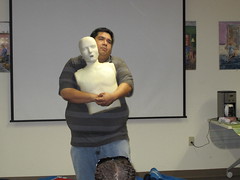
Earlier this year one of the mothers in our Metropolitan Parent Center (MPC) underwent a very scary experience when her three year old daughter removed a barrette from her hair and placed it into her mouth. The little girl swallowed it and started to choke. Luckily, the mother was able to safely manage the situation and successfully remove the object. After going through such a scary ordeal she suggested that we offer a workshop on first aid techniques so that parents can learn what to do in case of an emergency.

The MPC collaborated with Sinergia’s nursing staff, who were able to recruit a representative from the American Red Cross to conduct a CPR training for parents. Those who attended received first aid information, and they were taught how to perform Cardiopulmonary Resuscitation, or CPR, and help choking victims using the Heimlich maneuver. Mr. Antonio Chavez (above) from the Red Cross brought along a number life size dolls of children and adults that were used to practice CPR techniques. It was an intensive, interactive and exciting experience for the parents. They had to pass an on-site test in order to earn the CPR and First Aid certification, which is good for two years. Eighteen participants were able to obtain the certification, and these parents now possess skills that will help their loved ones in case of an emergency.

Would you know what to do if your child gets hurt or is in need of medical attention? Below are some ways that you can start getting prepared.

BASIC TIPS EVERYONE IN THE HOUSE SHOULD FOLLOW TO CREATE A SAFER HOME

1. DOES EVERYONE IN YOUR HOUSEHOLD INCLUDING YOUR HOME HELP AND CHILDREN KNOW YOUR ADDRESS AND NEAREST LANDMARK? Write your address and nearest landmark down on a wall both upstairs and downstairs in case you need to call for an ambulance. If you panic it’s easier to read off the paper.

2. DO YOU KEEP ALL YOUR FIRST AID ITEMS IN ONE LOCATION OR IN DIFFERENT DRAWERS THROUGHOUT THE HOUSE? If an accident happens its easier if  everything in one place.

3. DOES EVERYONE IN THE HOUSE KNOW WHERE THE FIRST AID KIT IS ? Ideally on a shelf out of reach or in a locked cupboard.

4. DO YOU HAVE A FIRST AID KIT IN THE CAR? Accidents can happen anywhere, at the beach, shopping mall etc. Make sure you have a back up first aid kit in the car.

5. DO YOU HAVE A LANDLINE IN ADDITION TO YOUR MOBILE? In an emergency you don’t want to be looking for your mobile only to find it’s out of battery or credit.

6. DO YOU AND YOUR HOME HELP KNOW WHERE THE NEAREST HOSPITAL IS FROM YOUR HOME AND THE QUICKEST ROUTE?

7. IF YOUR BABY OR CHILD CHOKES ON FOOD, FOR EXAMPLE A GRAPE, WOULD YOU KNOW HOW TO RESPOND?
Choking is every parent’s worst nightmare and so common amongst infants and young children. A first aid course will demonstrate the most effective way to remove an obstruction in the throat without causing further damage.

8. DOES EVERYONE IN THE HOUSE KNOW THE NUMBER TO CALL FOR AN AMBULANCE?
You would be surprised at the number of parents and home help that have never thought of it. Dial 999 for medical assistance.

9. DO YOU HAVE RULES IN THE HOUSE TO AVOID ACCIDENTS IN THE KITCHEN, BATHROOM etc.?
For example, pan handles should always be facing inwards on the stove, have a "no kids" zone in the kitchen while preparing food, remove knives and sharp utensils from kitchen surfaces immediately after use.

10. DO YOU KEEP YOUR MEDICAL DOCUMENTS IN A CENTRAL LOCATION THAT CAN BE EASILY REACHED SHOULD YOU HAVE TO GO QUICKLY TO THE HOSPITAL? Label a separate folder for everyone in the home and store all medical information in these files in one place so everyone knows where they are in case you have to take them quickly to the doctors or hospital.

WHEN TO GO FOR HELP

Your child needs to go to an emergency room if he or she has:
  • An injury that causes the child to lose consciousness
  • A deep laceration
  • A possible broken bone
  • A burn
  • An animal bite
  • Swallowed something toxic
  • Extreme difficulty breathing (for instance, because of an asthma attack or choking.
  • A convulsion
  • Vomited blood
  • Bleeding from the ear
  • A fall followed by a severe headache, persistent vomiting, weakness, or an
  • abrupt change in mental status (hallucinations, incoherence, irritability or
  • extreme lethargy) within 24 hours
  • A fall or head injury and the child is under 1
  • A fever and the child is under two months old
Courtesy of the American Red Cross and the American Heart Association. 

Tuesday, April 5, 2011

Sinergia Participates in Autism Awareness Month

  Did you know?

An average of 1 in 110 children in the United States have an Autism Spectrum Disorder

April is Autism Awareness Month, a cause that Sinergia strongly believes in and is continuously looking for ways to support. Our Autism Initiative program recently applied for a $5,000 Irvin Stern Foundation grant. The foundation was looking for innovative ideas to fund and our idea was  approved. Through the grant we will be able to buy three laptops for teens with Asperger's Syndrome to teach some mothers who are not computer proficient. Additionally, the youth will have opportunities for social interaction and at the same time some parents will learn about computers and the internet. We are very pleased to provide an opportunity for the teens to contribute to the technology learning of mothers.

We are offering the following autism-related events in April:

April 8th: Breakfast for Spanish Speaking families
April 14th: Implementing Dairy Free Diet for Kids
April 29th: The Role of Art in Autism

Additional Autism resources:

Centers for Disease Control and Prevention
Libraries and Autism
New York's Initiative for Adults and Children on the Autism Spectrum
OPWDD Autism Calendar of Events
Autism Society
Autism Speaks

The UN also has a new section on their website with resources and UN autism events in April held at their headquarters in New York.

Autism World Views 2011: Help shine the light on global autism by participating in this 10 minute survey.

Friday, April 1, 2011

Health Effects of Consuming Too Much Sugar


Did you know that Mountain Dew soda contains the equivalent of 17 packets of sugar? And a small can of Red Bull, seven. That's what Sinergia staff and Day Hab participants found out during a seminar held March 28th, 2011 entitled "Health Effects of Consuming Too Much Sugar". The training was brought to Sinergia by the Union Settlement in partnership with the New York City Department of Health and The Public Health Outreach, as a part of their “Take Care New York” campaign to raise awareness about sugar consumption. The presenter, Kathleen Cain, a public health outreach coordinator for Union Settlement, talked about the frighteningly high consumption of sugar in all it’s forms, its lack of nutritional value, and the availability of healthy alternatives. She suggested that when shopping for fruit juice, people should read labels and choose those that are 100% fruit juice and then dilute them with water, because they still contain a significant amount of natural sugars. She promoted a petition to encourage local stores to move healthy beverages and foods to the front of their stores to help the communities choose better. "The forty plus participants that were present answered questions about their daily diets and were astounded to find so many items that were not so beneficial to their health, says Day Hab specialist Rob Maldonado. "Ms. Cain encouraged all of us to drink lots of water as the ultimate replacement for soft drinks."

This insightful workshop will be held again on April 13th for the Up-Living Program participants.

Monday, March 7, 2011

Choosing Healthy Foods

For Asuncion Muyalde, nutrition is an ongoing process. She oversees Sinergia's nursing department, and part of their job is to assist participants of the residential programs with their menu planning and food shopping. "Some of our consumers have problems because of their nutritional intake," explains Ms. Muyalde, "so for individuals with diabetes or other chronic conditions, proper foods are essential to their well being.  For example, for consumers with hyper tension we ensure they are on a low salt diet, although sometimes it's difficult to enforce. We educate consumers on food choices and what foods are loaded with vitamins and minerals so that they can maintain their health goals, whether it's low weight or low blood sugars."  The nursing staff teaches residents and other staff members about the wide variety of inexpensive food choices available in the market. "They don't have to buy organic products which are costlier. The most important thing is choosing foods wisely to promote health - that's a continuous process, a real nutritional challenge," she adds.

Ms. Muyalde came across this list on cspinet.org. "It's loaded with so much great information about foods that people that might not be aware of," she points out.

TEN Super Foods You Should Eat:

1.) Sweet potatoes= A nutritional all- star, loaded with carotenoids, Vitamin C, Potassium and fiber.

2.) Mangos= Just one cup supplies almost as much Vitamin A and C as most people need in an entire day.

3.) Plain Yogurt= Has more protein, potassium, calcium, zinc, and vitamins B-6 and B-12 than sweetened yogurt.

4.) Broccoli= Lots of vitamin C, carotenoids, and folic acid.

5.) Wild Salmon= The omega-3 fats in salmon can reduce the risk of sudden- death heart attacks.

6.) Crisp Breads= Loaded with fiber and and often fat-free.

7.) Beans= Inexpensive, low in fat, and rich in protein, iron, folic acid, and fiber. Choose garbanzo, pinto, black, navy, kidney or lentils.

8.) Watermelon= Excellent source of Vitamin C and carotenoids, and it tastes great.

9.) Butternut Squash= An easy way to get payloads of vitamins A and C and fiber.

10.) Leafy Greens= Loaded with Vitamin C, carotenoids, calcium & fiber.

March is National Nutrition Month so for more information on staying healthy visit eatright.org. Other articles of interest:
How Much Do Fruits and Vegetables Cost?
The Food Pyramid
Daily Food Planners & Interactive Tools 

Sinergia is offering 3 upcoming workshops on the topic of Alternative Nutrition for Children with Disabilities: Gluten Free Diets, on March 3rd, Reading Labels: Choosing Healthier Foods with Less Chemicals, on March 24th and Implementing a Dairy Free Diet for Kids, on April 14th. To register for these FREE events, please call Gina Peña-Campodonico at 212 643-2840, ext. 305 or by e-mail at gpena at sinergiany.org.

Friday, February 4, 2011

The Diet and Disability Connection


Is there a connection between disability and the food we eat? That question was very much on Lizette Dunn-Barcelona's mind. The Associate Director of Sinergia had searched for years for different ways to cope with her daughter's severe asthma. "My 14 year old would frequently have bouts of hay fever, and since we were unable to control her asthma at home, she was often hospitalized - for days - until her breathing was normalized," explains Ms. Dunn-Barcelona. She had often wondered about the effects that certain foods had on allergies, and then two years ago she read that gluten accumulates in the body and inhibits its ability to fight environmental toxins. "I decided to limit my daughter's gluten intake during allergy season, between March and May, and noticed a significant difference in her body's response. She still sneezed all the time and got asthma, but we were able to control it from home and she wasn't hospitalized," adds the mother of two.

Last December Ms. Dunn-Barcelona attended a workshop offered by Sinergia entitled "Alternative Nutrition for Children with Disabilities: Gluten Free Diets". Her son had been recently diagnosed with ADHD, and having had such positive results by changing her daughter's diet, she was very interested in the topic. The instructor, Kristin Boncher, who is founder of WhatToFeedYourKids.com, talked about her own child and how through food she got him to be more responsive to his environment, interact with people and break free of whatever had a hold of him. She achieved this by removing gluten, soy and dairy from his diet. Since Ms. Dunn-Barcelona's family was already diary free, and because of the success she had when limiting her daughter's gluten intake, she decided to eliminate all three of those foods from her household, commencing in February 2011. In order to get her family onboard with the idea, she took on the role of guinea pig, and on December 23, 2010 embarked on her food "experiment".

"I felt more energetic and was able to focus more easily at work. I purchased gluten, soy and diary free bread, pasta and cheese and incorporated them into my diet. On January 9, 2011, I was celebrating my birthday and ate a slice of birthday cake; it was regular cake filled with gluten. Within 20 minutes I felt as if someone had given me a sedative. I was unable to concentrate, and lost my focus at work. The entire day I felt sluggish and tired. I began to think about my son and wondered if his inability to concentrate is exacerbated by the cloudiness caused by the food I'm feeding him. All along I've been limiting his sugar intake, but never thought about removing anything else."

Ms. Dunn-Barcelona immediately went back on her diet and can't think about turning back. She has learned what to buy and how to cook it and is feeling better because of the changes she's made. "I'm looking forward to introducing my family to new, healthy ways of eating, and hopefully completely eliminating my daughter's allergy and helping my son on his quest to deal better with his diagnosis," she says.

Sinergia is offering 3 upcoming workshops on the topic of Alternative Nutrition for Children with Disabilities: Gluten Free Diets, on March 3rd, Reading Labels: Choosing Healthier Foods with Less Chemicals, on March 9th and Implementing a Dairy Free Diet for Kids, on April 14th. To register for these FREE events, please call Gina Peña-Campodonico at 212 643-2840, ext. 305 or by e-mail at gpena@sinergiany.org.  
Photo credit

Thursday, February 3, 2011

New Workshop For Parents of Deaf-Blind Children


Sinergia's Metropolitan Parent Center (MPC) has entered into collaboration with the New York Deaf-Blind Collaborative (NYDBC) to provide a training space and information on education advocacy for a group of parents of children with Deaf-Blindness. The NYDBC is a federally funded project which provides technical assistance to improve services for children and youth who are deaf-blind (ages 0-21.) The NYDBC has a program called Parent Leadership Training that will teach parent skills to prepare them to be advocates for their children, learn about their rights and how to access/obtain services and resources in their own communities. The MPC has provided the Nivia Zavala Conference Center to the NYDBC so that they can conduct their Parent Leadership Program. The first session took place the weekend of January 22 & 23. Nine parents participated, including three married couples. There will be other weekend sessions taking place in March (for Spanish-speaking parents) and in April. In addition to providing a training space, the MPC will be offering presentations on education advocacy for parents which focus on how parents can be effective advocates for their children and for other families and become empowered in the process.

Thursday, July 22, 2010

Education and Advocacy for the Deaf and Blind

Sinergia will be offering a new program in association with the New York Deaf-Blind Collaborative (NYSDBC), an organization that is funded by the US Department of Education’s Office of Special Education Programs (OSEP) and is housed at Queens College in Flushing, NY.  The NYSDBC’s goal is to improve services for children and youth from the ages of 0-21, who are deaf and blind. They provide technical assistance that includes needs assessment, negotiation of goals, and decision-making about services in a collaborative environment.

The NYSDBC is interested in our Metropolitan Parent Center (MPC) hosting a series of Parent Leadership Training sessions to English and Spanish speaking parents of children who are deaf-blind and who live in the metropolitan area.  The intent of the series is to train parents to be effective advocates for their children by providing them with useful and valuable leadership tools and skills. The NYSDBC has conducted highly successful trainings in Rochester, NY and will offer trainings in Westchester, NY and on Long Island. Sinergia will be providing the space and the MPC will be in charge of the trainings, which will focus on education advocacy and information about resources available from the Office of People with Developmental Disabilities, Medicaid/Medicare, SSI, Legislation, etc.

There will be two trainings offered: one to English speaking families in January 2011, and another one for Spanish speaking families next year at a time yet to be determined. Training sessions will take place over a three week-end period. For more information please contact Godfrey Rivera at 212-643-2840.

Friday, March 26, 2010

Recap of February 2010 FAST Project

On February 22, 24, 25 and 26 Sinergia held four pilot training modules to teach families and their children to become self-advocates as part of the FAST Project (which we talked about in our Feb. 17th post). The topics covered were: Employment – Getting and Keeping the First Job, Effective Parent Advocacy, Working for Change - The Power of a Personal Story, and The Journey to Adulthood: What Parents Need to Know. The trainings were presented by Lizette Dunn-Barcelona, Cassandra Archie and William Bird Forteza.

Even during the worst snow storms in New York City history 104 parents attended and participated in the four trainings, and we'd like to take this opportunity to thank everyone that was there.

Here are a few comments we received from parents during the trainings:

"The workshop was very empowering."


"I learned from this workshop I should to talk to my child about the difference between friendship and romance."


"Very effective in covering key information to help kids have a quality education."


"As a mother I need workshops like these to be able to help my daughter with issues wherever we find them."


"What I learned most was the attitude you need to have when you ask for something and to speak clearly and with self assurance."
"The whole concept of telling a personal story was great, useful in focusing on what is important about our children."

Wednesday, February 17, 2010

Sinergia Participates in Self Advocacy Pilot Program for Parents of Children with Disabilities

Sinergia is participating in piloting the curriculums of the Family Advocacy and Support Training project (FAST), a Project of National Significance with funding from the Administration on Developmental Disabilities (ADD). It focuses on the development of training modules to teach families and their children to become self-advocates. We invite parents to participate in one or more of the upcoming free pilot workshops listed below (for more details of each session visit our calendar of events). Your feedback will help to ensure that training materials are appropriate and effective.


Getting and Keeping the First Job
Monday, February 22, 2010 10:00am to 12:00pm
Presenter: Lizzette Dunn-Barcelona

Skills for Effective Parent Advocacy
Wednesday, February 24, 2010 10:00 am to 12:00 pm
Presenter: Cassandra Archie

Working for Change: Using the Power of a Personal Story
Thursday, February 25, 2010 10:00am to 12:00 pm
Presenter: Cassandra Archie
Please bring a picture of your child for the workshop.

The Journey to Adulthood: What Parents Need to Know (Sexuality)

Friday, February 26, 2010 11:00am to 1:00 pm
Presenter: William Bird

Location: Sinergia, 2082 Lexington Avenue, 4th Floor
Dr. Nivia Zavala Conference Center
New York, NY 10035
RSVP: (212) 643-2840

The first phase of the collaboration took place in December. It involved conducting discussions with five parent support groups at Sinergia for feedback from underserved and underrepresented families of children with disabilities.

Each focus group was conducted in Spanish, and facilitated by a Sinergia staff person that was familiar to and had the trust of the participants. The groups were held on weekdays at different times of the day and lasted for two hours. Facilitators were provided with a set of open ended questions that were asked of each focus group and recorded. These are some sample questions and answers from focus groups held at Sinergia:

Question: What type of trainings appeal to you?
"A workshop to prepare parents for their children's independence - for those parents having difficulty letting go"

Question: What would be the most successful way of gaining your participation in a survey 3 months after training to find out if the information was helpful?
"Internet - we need to know how to use the internet because our children know how to use it and we must be able to supervise them and we need to get the knowledge"

Question: What do you think your son or daughter will be doing as an adult?
"My daughter will be an artist or dancer because she is talented artistically"

Question: Have you seen or known of people with disabilities who are in relationships?
"I have seen normal people in a relationship, the thought of my child being in a relationship concerns me because I don't want him being taken advantage of"

Question: Have you ever needed to speak on your child's behalf to an educator or professional?
"Yes"

Please email us at information@sinergiany.org if you're interested in participating in the upcoming focus group sessions.

Friday, December 4, 2009

Workshop Recap: Understanding Psychological Learning Disability Testing

On Tuesday November 10th Sinergia's Metropolitan Parent Center held a workshop entitled “Understanding Psychological Testing: Getting the Most from Your Child’s Evaluation.” The workshop was conducted by Dr. Ed Petrofsky, a licensed psychologist who specializes in dyslexia / learning disability testing as well as assessments of behavioral and emotional concerns. Dr. Petrofsky covered the different types of psychological tests that are currently used and discussed the various components for each test. For information on upcoming workshops visit our calendar of events.

YRNCWDVEYKFN